
 Amos Oge Kalu
Press Release: January 20, 2026
The apex Igbo socio-cultural organization, Ohanaeze Ndigbo, driven by its unwavering commitment to truth, justice, and the welfare of Ndigbo worldwide, issues this decisive statement in response to recent publications by the United States-based media outlet, The New York Times. We are compelled to address the inherent falsehoods and potentially incendiary nature of the report, particularly as it concerns the Igbo people.
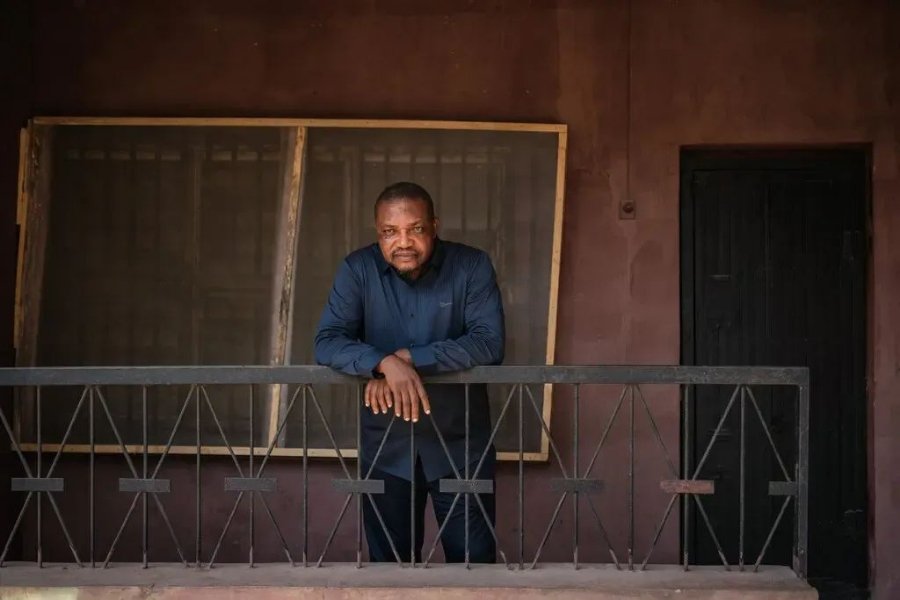
Ohanaeze Ndigbo unequivocally states that the Igbo are not, and have never been, involved in any capacity as intelligence providers or participants in the United States’ military or intelligence operations against terrorist networks in Nigeria, including the recent airstrikes against ISIS elements in Sokoto. We emphatically disavow any implication that Igbo individuals provided intelligence that led to the bombing.
While we commend the ongoing partnership and collaboration between the United States government under President Donald Trump and the Federal Government of Nigeria led by President Bola Ahmed Tinubu in combating terrorism, we categorically reject attempts to unfairly implicate the Igbo in such security operations.
Our concerns are deeply rooted in historical precedent. The New York Times article, which attempts to portray an Igbo individual—purportedly a “screwdriver seller” from Onitsha—as a key source of intelligence for US airstrikes, mirrors the insidious propaganda campaigns that fueled ethnic tensions leading to the tragic events of 1966.
We find this narrative, particularly the timing and context of its publication, deeply troubling. The article’s assertion that such an individual influenced President Trump’s actions is not only far-fetched but also clearly designed to stoke tribal animosity and suspicion against the Igbo population, especially those residing in Northern Nigeria. We also note that the report was supported by Nigerian freelance photographer, Taiwo Aina.
Ohanaeze Ndigbo firmly believes that The New York Times, as a globally respected media organization, should not allow itself to be manipulated into disseminating unverified and inflammatory narratives. Reports of this nature have the potential to cause grave consequences, including ethnic tension and instability within Nigeria.
The ludicrous portrayal of an Onitsha-based trader as a critical intelligence asset is patently absurd and deeply insulting. It represents yet another attempt to resurrect the age-old tactic of scapegoating the Igbo for Nigeria’s security challenges.
For the purpose of clarity and historical accuracy, Ohanaeze Ndigbo states the following:
Firstly, the Igbo are neither the originators nor the primary promoters of the narrative of Christian persecution in Nigeria, despite the undeniable fact that many Igbo have been victims of such violence. Numerous organizations, faith-based institutions, civil rights groups, and non-Igbo actors—both within Northern Nigeria and across the diaspora—have consistently raised awareness about religious persecution. Why, then, did The New York Times choose to single out an Igbo individual? What agenda is being pursued? Are foreign lobbyists involved in orchestrating this narrative?
Secondly, Ohanaeze Ndigbo is not opposed to the collaboration between the United States and Nigeria in the fight against terrorism, nor do we object to the role of lobbyists in shaping Nigeria’s international image. However, we are resolutely opposed to any attempt to revive anti-Igbo propaganda or to weaponize ethnicity for political or geopolitical ends. This dangerous narrative must be exposed and halted.
The painful memories of the 1966 pogrom against the Igbo remain indelibly etched in our collective consciousness. We recall with grave concern the role played by sections of the international media that falsely labeled the January 15, 1966 coup as an “Igbo Coup,” a distortion that helped fuel the July 1966 counter-coup and the subsequent genocide against the Igbo.
The current New York Times article follows a similarly dangerous trajectory. Since 1966, the Igbo have repeatedly been blamed for Nigeria’s crises. We state categorically: never again shall the Igbo be used as scapegoats by any international media organization.
In light of these facts, Ohanaeze Ndigbo demands an immediate, unreserved apology from The New York Times and a full retraction of the misleading and potentially dangerous article. We hold the publication responsible for any escalation of ethnic or security tensions arising from this report, particularly in Northern Nigeria.
Furthermore, we urge all Igbo civil rights organizations to exercise restraint and avoid commenting on sensitive security matters relating to US-Nigeria counter-terrorism collaboration, so that legitimate Igbo concerns are not misrepresented or exploited to justify false narratives.
Mazi Okechukwu Isiguzoro
Deputy President General
Ohanaeze Ndigbo Worldwide
Chief Chinyereze Ohia
National Spokesman
Ohanaeze Ndigbo Worldwide
January 20, 2026
Copyright Warning!
Disclaimer
Just to let you know, comments expressed here do not reflect the opinions of OHAFIATV News or any employee thereof. Also, every opinion expressed in any article is strictly that of the author(s), except where otherwise stated.

ATTENTION: Stay informed and ahead of the curve! Follow OHAFIATV on WhatsApp for updates! CLICK HERE!
Have any thoughts?
Share your reaction or leave a quick response — we’d love to hear what you think!
-
 0
0
-
 0
0
-
 0
0
-
 0
0
-
 0
0
-
 0
0