
 Amos Oge Kalu
By Comr Amos Oge Kalu
The ongoing attempts by some tribal bigots to ethnicize the alleged October 2025 coup plot against President Bola Ahmed Tinubu are deeply troubling, not only because they distort the facts of the case, but because they consciously recycle a historical lie that once plunged Nigeria into one of its darkest chapters. What is unfolding is not new. It is a familiar and dangerous strategy: attach a sensitive national crisis to an Igbo face, amplify it through the media, and allow ethnic suspicion to replace evidence and due process.
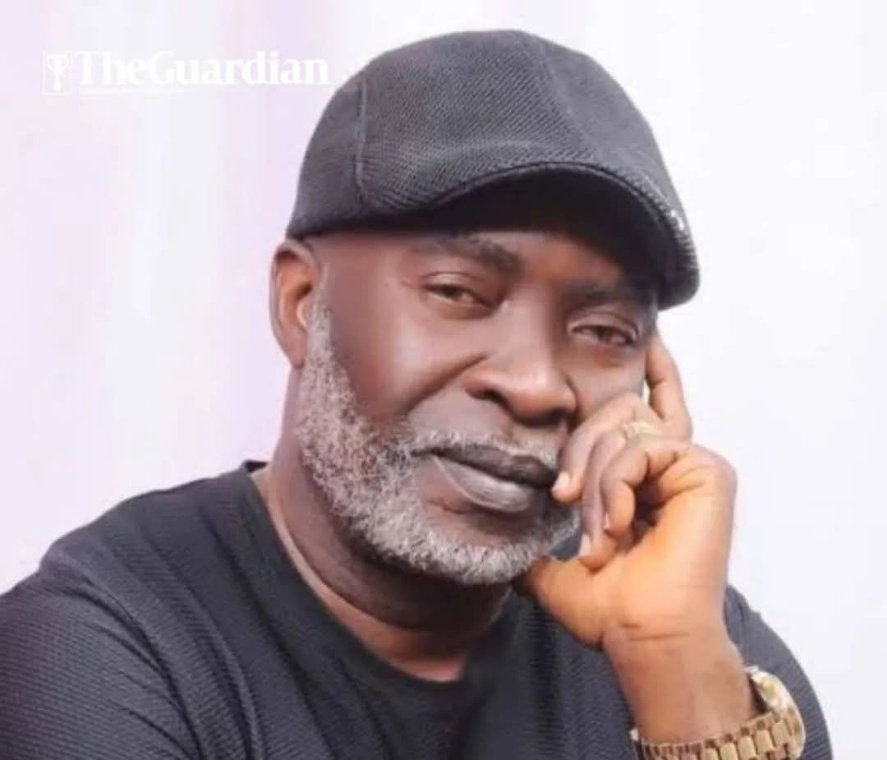
Available reports on the October 2025 incident indicate that the matter involves a number of serving and retired military officers drawn from different parts of the country, with a significant number reportedly from the North. At no point has any official security briefing or credible investigative update framed the allegation as ethnic or regional in nature. Yet, in a disturbing twist, public discourse has been flooded with the image of a single Igbo man, aggressively circulated across social media and some digital news platforms as the supposed face of the plot. This individual is not a soldier, not a known security actor, and not a member of the armed forces. He is a civilian—an actor, film producer, and director—whose image is being deployed as a visual shortcut to create an ethnic association where none has been established.
This kind of narrative manipulation is not accidental. In Nigeria, images often do more damage than words. Once an ethnic face is attached to a controversial national event, facts struggle to catch up. This was precisely how the January 1966 military coup, a mutiny involving officers from different backgrounds, was hastily and falsely branded an “Igbo coup.” That ethnic labeling did not emerge from evidence; it emerged from political convenience. The consequences were catastrophic: mass killings of Easterners in the North, widespread displacement, and eventually a civil war that claimed the lives of over three million people, most of them Igbo civilians. History has since exposed the falsity of that narrative, yet its scars remain etched into Nigeria’s collective memory.
The current effort to frame the October 2025 alleged coup along ethnic lines shows how little has been learned. By selectively amplifying one Igbo image while downplaying or ignoring the identities of others mentioned in the same reports, those pushing this narrative are not seeking truth. They are engaging in ethnic engineering. This is how national tragedies are seeded—quietly, visually, and irresponsibly—long before the damage becomes obvious.
Even more concerning is the role being played by sections of the Nigerian media. Journalism carries a duty not just to report events, but to contextualize them responsibly. When media platforms circulate unverified images, emphasize ethnicity over facts, and allow tribal sentiment to shape coverage, they are no longer informing the public; they are inflaming it. In doing so, they may believe they are targeting the Igbo, but in reality, they are weakening the very foundations of Nigeria’s fragile unity. A nation cannot survive on selective outrage, ethnic scapegoating, and recycled falsehoods.
It must be clearly stated that rejecting the ethnicization of the October 2025 alleged coup is not a defense of criminality, nor is it an attempt to shield anyone from lawful investigation. If crimes were committed, the law should take its full course against individuals proven to be responsible. What must be rejected is the lazy and dangerous substitution of ethnicity for evidence. Collective blame has never strengthened Nigeria; it has only deepened mistrust and widened existing cracks.
Nigeria has walked this road before, and the destination is well known. The lie of 1966 did not end with words; it ended with blood, displacement, and decades of unresolved pain. To resurrect that same narrative in 2026, in a different form but with the same target, is to play with fire in a country already burdened by insecurity and division. No nation heals by reopening wounds it never properly treated.
If Nigeria is to move forward, it must resist the temptation to explain complex security challenges through tribal stereotypes. Truth, restraint, and historical honesty are not optional—they are essential. Any society that repeatedly defines itself by hostility toward one group eventually undermines its own survival. The October 2025 incident must be investigated on the basis of facts and law, not ethnic imagination. Nigeria cannot afford another 1966-style falsehood, and history will not forgive those who knowingly attempt to recreate it.
Comr. Amos Oge Kalu, a Media Practitioner, writes from Abuja.
Email – amoskalu44@gmail.com
Copyright Warning!
Disclaimer
Just to let you know, comments expressed here do not reflect the opinions of OHAFIATV News or any employee thereof. Also, every opinion expressed in any article is strictly that of the author(s), except where otherwise stated.

ATTENTION: Stay informed and ahead of the curve! Follow OHAFIATV on WhatsApp for updates! CLICK HERE!
Have any thoughts?
Share your reaction or leave a quick response — we’d love to hear what you think!
-
 0
0
-
 0
0
-
 0
0
-
 0
0
-
 0
0
-
 0
0