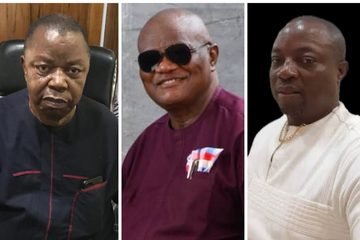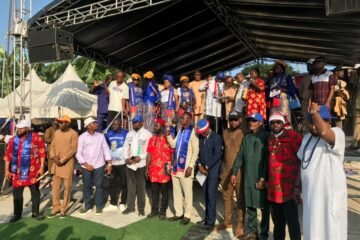

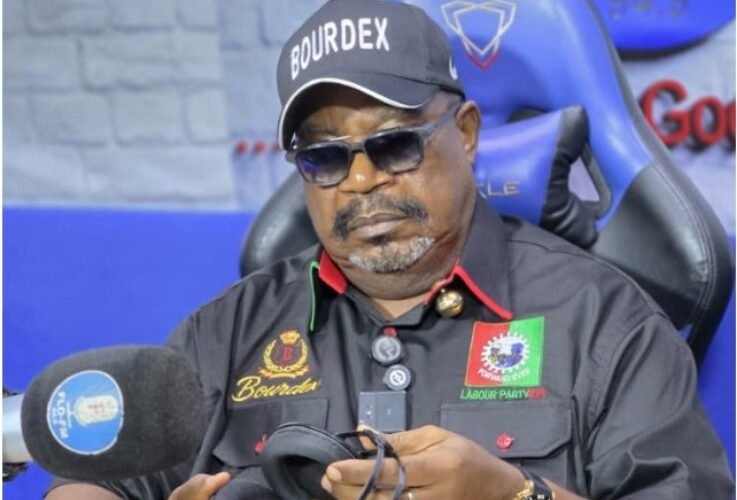
The Labour Party senatorial candidate for Abia North Senatorial District, Chief Dr. David Ogba Onuoha Bourdex, MFR, OON, has stated that genuine political leadership must be anchored on institutional accountability, financial discipline, and measurable outcomes rather than mere titles and official privileges.
Speaking during the latest edition of his weekly radio broadcast, BOURDEX HOUR, Chief Bourdex engaged in an extensive discussion on governance, public expenditure, project execution, and the constitutional responsibilities of a senator ahead of the 2027 general elections.
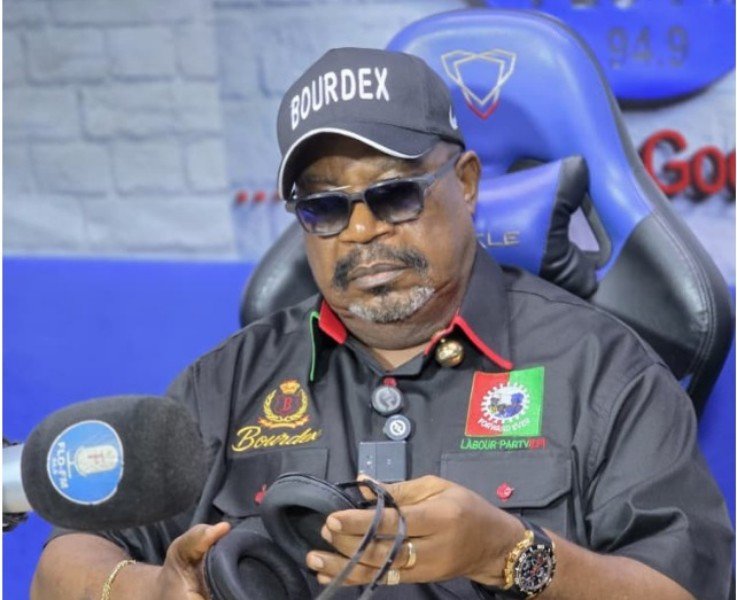
Responding to questions from the programme anchor on how to distinguish true leadership from mere occupancy of public office, Chief Bourdex noted that authority held on behalf of the people carries defined obligations. Comparing corporate governance with public administration, he explained that just as shareholders demand accountability from a chief executive when an enterprise underperforms, citizens have the right to scrutinize how public officials manage state resources.
“Leadership is not the same thing as holding a position. A man may occupy a very important office without exercising effective leadership, and another person may hold a relatively modest position yet demonstrate exceptional leadership. The difference lies in responsibility, judgment, and results,” Chief Bourdex stated.
He commended the Abia State Governor, Dr. Alex Chioma Otti, OFR, for emphasizing discipline, responsible resource management, and measurable public service, adding that such principles must be institutionalized across ministries, local governments, and legislatures.
Addressing the proliferation of campaign promises across Nigeria, the industrialist argued that public performance should be evaluated through clear benchmarks rather than ceremonial announcements. He outlined four distinct stages of public projects—intention, funding approval, physical construction, and functional public benefit—noting that a completed building only delivers value when equipped and operational.
According to him, whether assessing a health centre, road, school, or market, citizens should ask specific questions regarding location, implementing responsibility, estimated cost, completion timelines, and utility.
On the management of public funds, Chief Bourdex stressed that public money belongs strictly to the citizenry and must be governed by statutory procurement rules, documented approvals, regular reconciliations, and independent audits. He observed that corruption often begins with minor procedural infractions before escalating into systemic decay.
“The objective should not be to depend exclusively upon the personal integrity of one governor or commissioner. We should build institutions that make the misuse of public money difficult, detectable, and punishable to whoever occupies the office,” he remarked.
Reflecting on his tenure as the Transitional Committee Chairman (Mayor) of Ohafia Local Government Area between November 2023 and November 2024, Chief Bourdex highlighted the importance of record-keeping and institutional continuity at the grassroots.
He recounted efforts made during his administration to retrieve original survey records and engage state authorities to protect council lands from encroachment, alongside rehabilitating administrative offices at the council headquarters. He added that he compiled comprehensive handover notes to ensure transparency, welcoming scrutiny of his tenure. He also noted the significance of the November 12 anti-corruption sensitization programme organized by the Abia State Ministry of Local Government and Chieftaincy Affairs in collaboration with the Independent Corrupt Practices and Other Related Offences Commission (ICPC).
Addressing public expectations regarding constituency projects, Chief Bourdex clarified the distinction between the executive arm of government and the National Assembly. He explained that a senator’s primary mandate revolves around lawmaking, examining public expenditure during appropriation processes, and conducting oversight of federal agencies.
To bridge the information gap between lawmakers and constituents, he proposed the publication of periodic constituency reports that clearly separate legislative activities—such as bills sponsored, motions moved, and committee engagements—from verified project outcomes.
Concluding the session, Chief Bourdex emphasized that accountability requires active, informed participation from citizens, community development unions, professional bodies, and the media beyond election cycles. He cautioned against partisan misinformation, urging communities to rely on verifiable dates, documents, and physical facts when monitoring public infrastructure, while taking collective ownership to protect functional public facilities.
Copyright Warning!
Disclaimer
Just to let you know, comments expressed here do not reflect the opinions of OHAFIATV News or any employee thereof. Also, every opinion expressed in any article is strictly that of the author(s), except where otherwise stated.