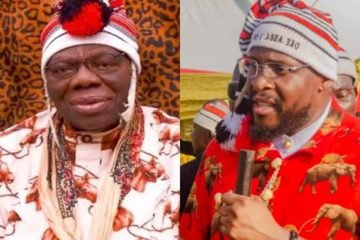

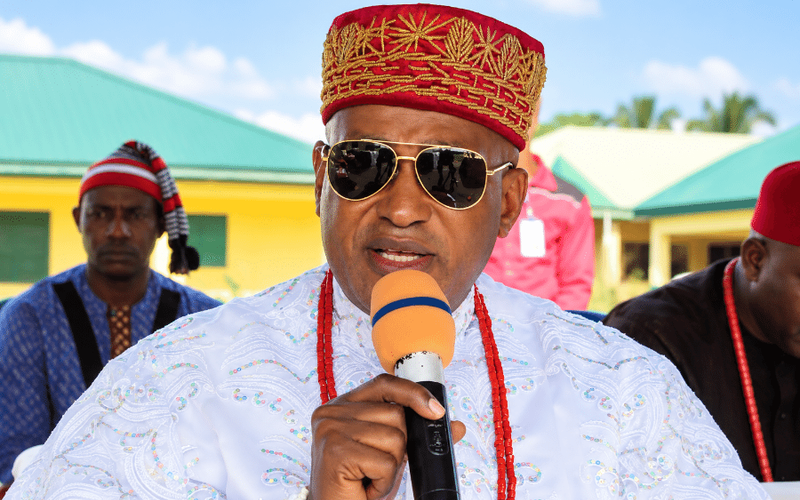
The Ohuruzo of Umuohuru Kingdom and Grand Patron, Ezenaebiri, HRH Eze Bobby Aguocha, has urged Nigerians to reject ethnic and religious politics ahead of the 2027 general elections, warning that electing leaders based on tribe, religion, tongue or surname rather than competence, character and track record could further weaken the country.
Eze Aguocha stated this while addressing Ezenaebiri youths at his Palace in Umuohuru Kingdom, where he cautioned against attempts by political actors to exploit ethnic and religious sentiments for electoral advantage.
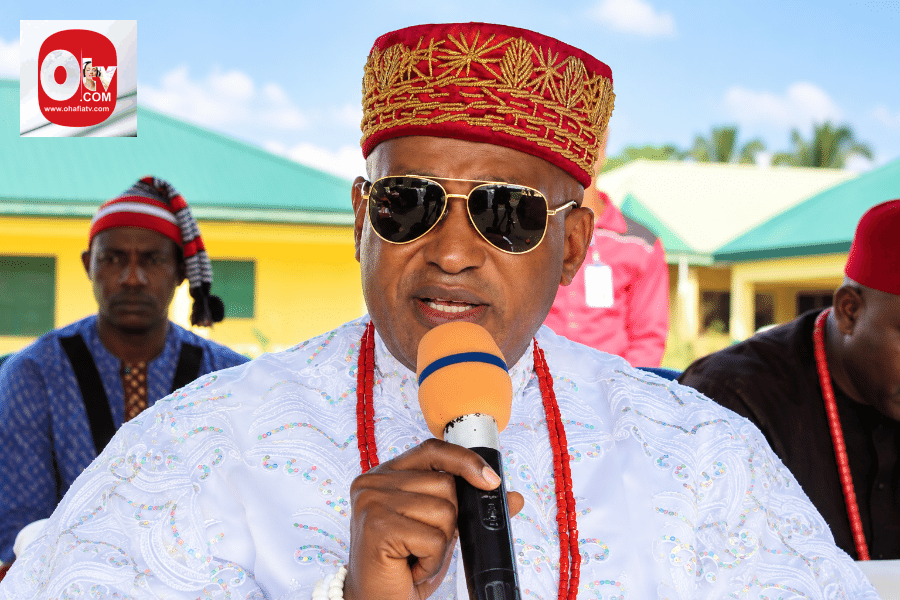
According to him, “Nigeria stands at a crossroads. As we approach another election cycle, the loudest voices in some quarters are already reaching for the oldest and most dangerous weapon in our country, ethnicity and religion.”
He said reducing the choice of Nigeria’s president to ethnic or religious considerations amounted to sacrificing competence and character for primordial sentiments.
“To play the ethnicity and religion card is to reduce the complex business of governance to asking voters to choose a president not by competence, character, or track record, but by tribe, religion, tongue, and surname,” he stated.
The traditional ruler warned that such politics would be particularly dangerous at a time Nigeria is battling insecurity, economic hardship and mutual suspicion.
“At a time when our country is already boiling from insecurity, economic hardship, and mutual suspicion, this is a path we cannot afford to walk again,” he said.
Eze Aguocha noted that Nigeria had evolved beyond rigid ethnic boundaries, pointing to the growing number of inter-ethnic families and communities across the country.
“Nigeria is no longer a country of neat ethnic compartments,” he said, citing examples of Nigerians from different ethnic backgrounds who marry, live together, do business and raise children across cultural lines.
“In Lagos, a Yoruba man is married to an Igbo woman and their children speak Hausa with their neighbours. In Abuja, a Hausa-Fulani family lives next door to an Ijaw business owner. In Port Harcourt, Warri, and Jos, homes are raising children of dual ethnicity.”
He argued that forcing such Nigerians to vote along ethnic lines was a contradiction of the reality of their own families.
“To tell these Nigerians that they must vote only for one of their own is to deny the very families they live in. It is to tell a child that she must choose between her father and her mother at the ballot box. That is not unity. That is division by design,” he declared.
Eze Aguocha also warned that ethnic and religious politics could shut out competent Nigerians from leadership.
“When we vote by ethnicity or religion, we also exclude talent,” he said, stressing that a brilliant administrator from the South-East should not be disqualified because of where he was born, just as an accomplished technocrat from the North should not be judged by his accent.
“A nation that rejects its best minds on tribal and religious beliefs, is a nation choosing to be doomed,” he warned.
According to him, the consequences of electing leaders primarily on ethnic or religious grounds could include lopsided appointments, abandoned projects and governments that serve sections rather than the entire country.
“History has shown us the price. When we elect leaders because of tribe or religion and not capacity, we get tribal results with lopsided appointments, abandoned projects outside their preferred zone, and governments that serve a section instead of the whole.”
He further warned that ethnic voting could turn elections into contests between tribes and deepen existing tensions.
“Ethnic voting also deepens the boiling tension we see today. It turns elections into a census of tribes. It tells the minority that their vote will never count. It tells the majority that power is their birthright,” he said.
He also cautioned voters against politicians who use ethnic and religious sentiments to distract attention from poor performance.
“Worse, people who have nothing to offer will always hide behind tribe and religion. When they cannot point to roads built, jobs created, or schools funded, they will say they are attacking us because of our tribe or religion. And we, the people, will clap. That is how bad leaders stay in power.”
Eze Aguocha insisted that the presidency must remain a national responsibility, irrespective of the ethnic or religious identity of whoever occupies the office.
“A president’s job is to be president of all Nigerians. The Igbo president must fix roads in Kano. The Hausa president must protect businesses in Aba. The Yoruba president must secure farms in Plateau.”
He warned: “If we vote for tribe and religion, we will only get a tribal president, and Nigeria will continue to bleed.”
The traditional ruler consequently appealed to traditional rulers, religious leaders and youths not to allow themselves to be used for divisive political campaigns.
“To our traditional rulers, religious leaders, and youth, do not be used,” he urged.
He particularly described Nigerians from mixed ethnic backgrounds as living evidence that unity across ethnic lines is possible, urging them to protect the bonds that politics could threaten.
“To every Nigerian with dual ethnicity in their home: you are the future of this country. Your home is proof that we can live together. Do not let politics tear apart what love has joined.”
Eze Aguocha’s message, as political activities build towards 2027, is a call for Nigerians to judge candidates by competence, character, capacity and record, rather than tribe, religion or surname.
For him, Nigeria needs a president who will govern for every Nigerian—not a president elected merely because he belongs to “one of our own.”
Copyright Warning!
Disclaimer
Just to let you know, comments expressed here do not reflect the opinions of OHAFIATV News or any employee thereof. Also, every opinion expressed in any article is strictly that of the author(s), except where otherwise stated.