
 Amos Oge Kalu
Nigeria’s banking sector is set for renewed strength as Sterling Bank, Ecobank, and 22 other financial institutions have successfully met the Central Bank of Nigeria’s (CBN) revised recapitalisation requirements, well ahead of the March 31, 2026 compliance deadline.
The milestone marks a significant step in the CBN’s effort to strengthen the resilience of the financial system, improve banks’ capacity to absorb economic shocks, and position the sector to better support national economic growth and stability.
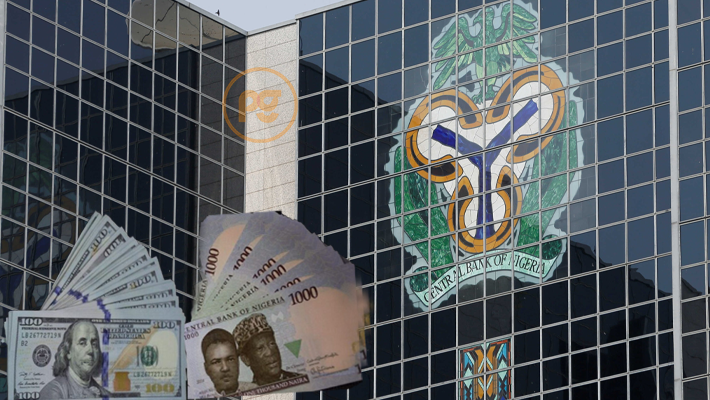
The recapitalisation programme, which commenced in 2024, requires commercial banks with international authorisation to maintain a minimum capital base of ₦500 billion, national banks to raise ₦200 billion, and regional banks to meet ₦50 billion. Separate thresholds were also introduced for non-interest banks, with national non-interest banks required to raise ₦20 billion and regional non-interest banks ₦10 billion.
The policy has triggered widespread equity raises, rights issues, public offers, mergers, and balance-sheet restructuring across the banking industry, drawing comparisons with the landmark 2004 banking consolidation under former CBN Governor Charles Soludo, which reduced the number of banks from 89 to 25.
Access Bank emerged as one of the frontrunners after raising ₦351 billion through a rights issue involving 17.77 billion shares priced at ₦19.75 per share. This lifted the bank’s capital base to ₦602.8 billion, exceeding the CBN’s minimum requirement by over ₦102 billion.
Zenith Bank also crossed the threshold, raising more than ₦350 billion through a combination of rights issues and public offers, bringing its capital base to ₦614 billion.
Meanwhile, First Hold Co confirmed that First Bank met the ₦500 billion requirement following a series of strategic initiatives, including a rights issue, private placement, and the divestment of its merchant banking subsidiary.
Among national banks, Sterling Bank completed its recapitalisation through multiple capital-raising efforts by its parent company, Sterling HoldCo, including a recent public offer that raised over ₦88 billion. Wema Bank also strengthened its balance sheet by raising ₦150 billion through a rights issue.
Foreign-owned lenders Citibank Nigeria and Standard Chartered Bank Nigeria met their requirements with capital support from their international parent companies.
In the non-interest banking segment, The Alternative Bank (AltBank), Jaiz Bank, TAJBank, and Lotus Bank have all met their respective thresholds. AltBank secured its required capital injection as early as May 2025, pushing its capital base comfortably above regulatory requirements and strengthening its competitive position in the sector.
With more banks achieving compliance, the Nigerian banking industry is increasingly positioned for improved stability, stronger balance sheets, and enhanced capacity to support investment and economic development.
Earlier this year, CBN Governor Olayemi Cardoso confirmed that the recapitalisation exercise remains on track, assuring Nigerians that non-compliant banks may face licence downgrades or mergers, but without immediate risks to depositors.
As the 2026 deadline approaches, further capital-raising activities and strategic investments are expected, a development that is set to reshape the future of banking in Nigeria and reinforce the sector’s competitiveness on the global stage.
Copyright Warning!
Disclaimer
Just to let you know, comments expressed here do not reflect the opinions of OHAFIATV News or any employee thereof. Also, every opinion expressed in any article is strictly that of the author(s), except where otherwise stated.

ATTENTION: Stay informed and ahead of the curve! Follow OHAFIATV on WhatsApp for updates! CLICK HERE!
Have any thoughts?
Share your reaction or leave a quick response — we’d love to hear what you think!
-
 0
0
-
 0
0
-
 0
0
-
 0
0
-
 0
0
-
 0
0