

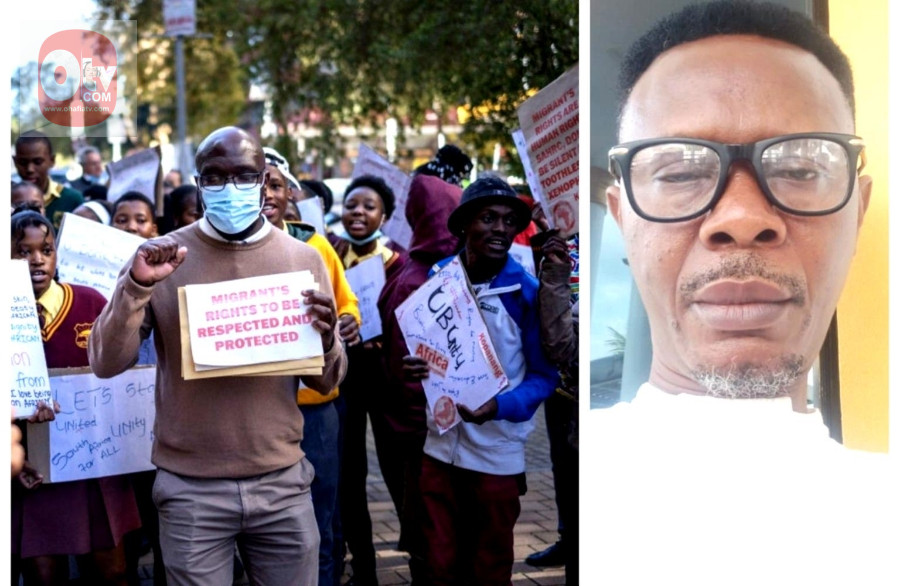
Across the African continent, a disturbing trend is gaining ground—one that threatens unity, peace, and the very idea of African brotherhood. The recent attacks and forced displacement of fellow Africans in Souttruth: sometimes, the greatest threat to Africans comes not from outside the continent, but from within.
Yet, this is not a problem unique to one nation.
In Nigeria, similar sentiments have echoed in subtle and overt ways. In cities like Lagos, some individuals have openly called on fellow Nigerians—particularly Igbos—to “return to the Southeast,” despite decades of coexistence, investment, and contribution to the local economy.
This contradiction is as troubling as it is dangerous.
At its root, such hostility is not strength—it is weakness. It is the inability to compete in an open, lawful environment. Those who migrate, settle, and thrive do so not by chance, but by resilience, enterprise, and belief in opportunity. They build businesses, create jobs, and contribute to the growth of their host communities. Yet, instead of being seen as partners in progress, they are often recast as threats.
The irony is undeniable. Properties now contested were, in many cases, legally acquired—sold willingly by previous generations. Agreements were made, opportunities embraced, and communities built together. But today, a new wave of resentment seeks to rewrite that history, driven not by facts, but by fear.
What is happening in South Africa offers a cautionary tale. Economic hardship and social frustration have been misdirected toward fellow Africans, under the false belief that expelling “outsiders” will solve deep-rooted problems. It never does. When the targets disappear, the underlying issues remain—often turning inward, breeding further instability.
Nigeria must resist this path.
In many parts of the Southeast, people from diverse backgrounds—Yoruba, Hausa, and others—live and do business peacefully among the Igbo. Competition exists, but so does coexistence. This is the model that should be strengthened, not undermined.
At the same time, it is essential to separate criminality from ethnicity. No society should tolerate crime, regardless of who commits it. But justice must be precise, not prejudiced. When entire groups are profiled based on the actions of a few, injustice becomes institutionalized, and unity begins to fracture.
The voices that shout “leave” are often the loudest, but not the wisest. History has shown that exclusion is not a solution—it is a catalyst for deeper division. A society that normalizes hostility against “others” eventually turns that hostility inward.
Africa stands at a crossroads.
We can either embrace the principles of unity, fairness, and shared progress—or descend into cycles of suspicion and self-destruction. The choice is clear, but it requires courage: the courage to compete fairly, to coexist peacefully, and to reject narratives rooted in fear.
Chasing one another out of cities, states, or countries is not a solution.
It is a confession of failure.
CALL TO ACTION:
Leaders, stakeholders, and citizens across Africa must rise to defend unity, uphold justice, and promote peaceful coexistence. The future of the continent depends not on division, but on our collective strength as one people.
Copyright Warning!
Disclaimer
Just to let you know, comments expressed here do not reflect the opinions of OHAFIATV News or any employee thereof. Also, every opinion expressed in any article is strictly that of the author(s), except where otherwise stated.