
By Dike Idika | 22nd April, 2026
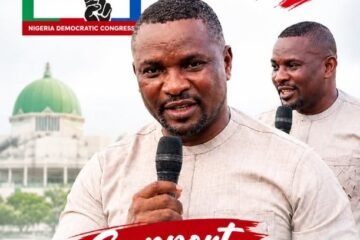
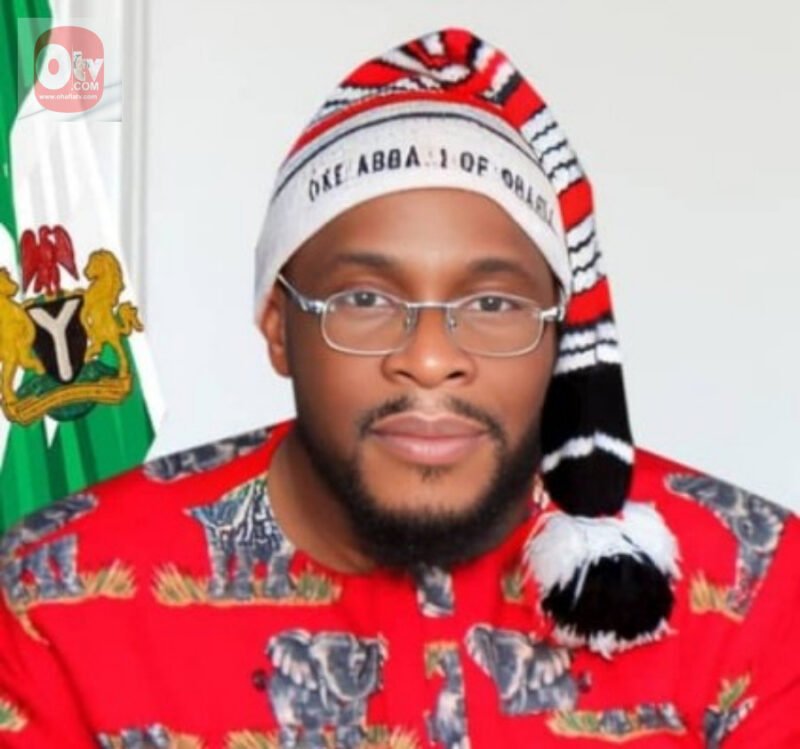
In Nigeria’s political lexicon, the word “representation” has for too long been stripped of meaning. It has come to signify presence at funerals, visibility at town hall meetings, and periodic motions on the floor of the legislature that rarely translate into change for the ordinary citizen. But in Arochukwu/Ohafia Federal Constituency, a different definition is emerging—one written not in communiqués but in motorcycles, sewing machines, classroom blocks, and boreholes. At the centre of this shift is Hon. Chief Ibe Okwara, a first-term legislator whose approach to public office is redefining expectations.
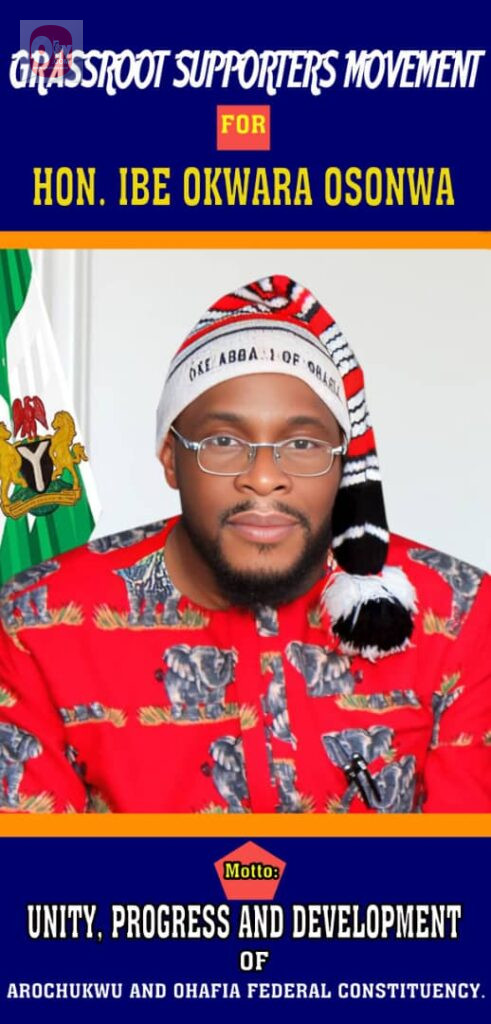
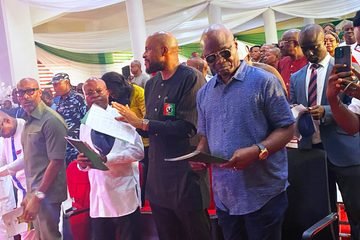
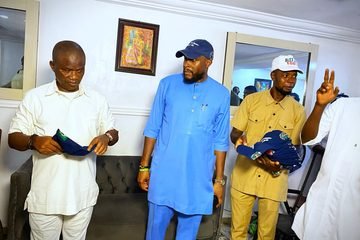
The clearest evidence of this new paradigm was his recent empowerment programme held at the Ohafia LGA Secretariat in Ebem. On the surface, it was a distribution event. In reality, it was a referendum on trust. Over 15,000 constituents from all wards registered interest—a figure that speaks not only to the depth of need but also to the confidence reposed in the process. The presence of the Deputy Governor, Engr. Ikechukwu Emetu, alongside other stakeholders, lent the occasion institutional weight. Yet what distinguished the day was not the dignitaries but the deliberate structure of the intervention.
The items distributed were not tokens of political patronage; they were tools of economic activation. Motorcycles, tricycle trucks, and minibuses were allocated to strengthen transport and logistics for farmers and small-scale traders. Sewing machines, grinding machines, refrigerators, and generators were provided to stimulate micro-enterprises, particularly for women and artisans. Food items were included to address immediate economic hardship. Most instructively, the deployment of a grader and payload loader signalled an understanding that true empowerment extends beyond individuals to the infrastructure that enables productivity. This was empowerment conceived as strategy, not as spectacle.
Critically, this programme does not stand alone. It is the latest entry in a consistent record of delivery. Under Hon. Okwara’s representation, youths have been equipped with laptops and ICT certifications, granting them entry into the digital economy. Communities in Abam, Ukwa Nkporo, and Abia Ohafia have received fully furnished classroom blocks, reinforcing the foundation of education. In Umuye, Ihechiowa, a solar-powered borehole now delivers clean water to a population that had long endured scarcity. These interventions are not abstractions; they are tangible improvements in the daily conditions of life.
What makes this record more compelling is the context in which it has been achieved. Federal funding constraints are a reality that many public office holders cite as justification for inaction. Hon. Okwara has acknowledged the same limitations but has refused to be defined by them. In doing so, he draws a clear line between leadership and the mere occupancy of office. His example suggests that where there is political will, institutional bottlenecks become hurdles to be navigated, not excuses to be invoked.
The implications of this approach extend beyond Arochukwu/Ohafia. For a first-term legislator, the conventional expectation is a period of learning, observation, and deference to established hierarchies. Hon. Okwara has inverted that expectation. He has demonstrated an acute understanding that in constituencies marked by developmental deficits, representation must transcend advocacy and manifest as verifiable results. He is accruing political capital through performance, thereby raising the bar for what constituents should demand and what colleagues must emulate.
The road ahead is not without challenge. Sustained delivery will invite heightened expectations and intensified scrutiny. However, if the current trajectory is maintained, Arochukwu/Ohafia may become a reference point in the discourse on grassroots governance in Nigeria. It will offer proof that the social contract between representative and represented can be fulfilled through competence, inclusivity, and measurable value.
Ultimately, Hon. Chief Ibe Okwara’s work restates a fundamental truth: leadership is not conferred by title but confirmed by impact. In Arochukwu/Ohafia today, that impact is no longer a promise. It is a grader opening a rural road. It is a sewing machine starting a business. It is a child learning in a new classroom. It is water flowing from a solar-powered borehole.
That is how representation is redefined.
Copyright Warning!
Disclaimer
Just to let you know, comments expressed here do not reflect the opinions of OHAFIATV News or any employee thereof. Also, every opinion expressed in any article is strictly that of the author(s), except where otherwise stated.