

By Comr. Amos Oge Kalu
As the political atmosphere gradually begins to heat up ahead of the 2027 general elections, Nigerians are once again being treated to the familiar spectacle of political actors spending more time attacking opponents than presenting workable solutions to the country’s numerous challenges.
One of the latest examples is the recent comment credited to Kenneth Okonkwo, former spokesman of the Labour Party presidential campaign and now a prominent supporter of former Vice President Atiku Abubakar and the African Democratic Congress (ADC).
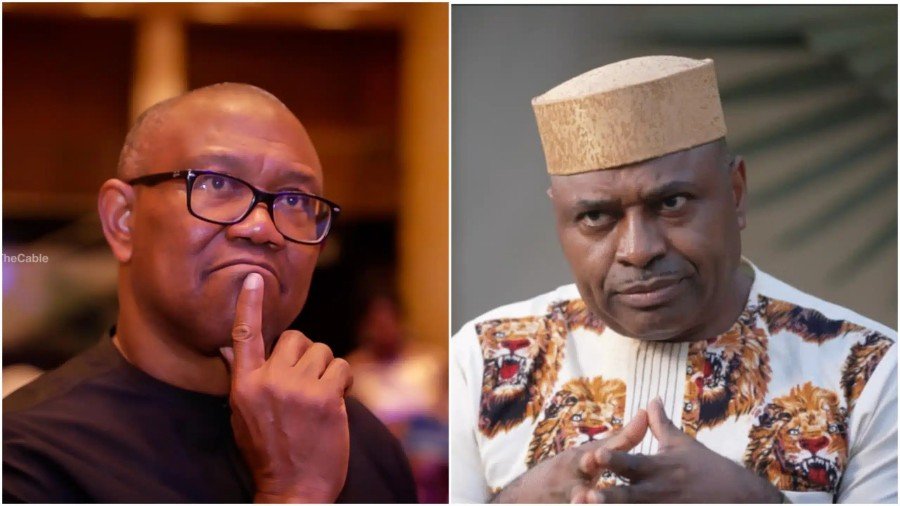
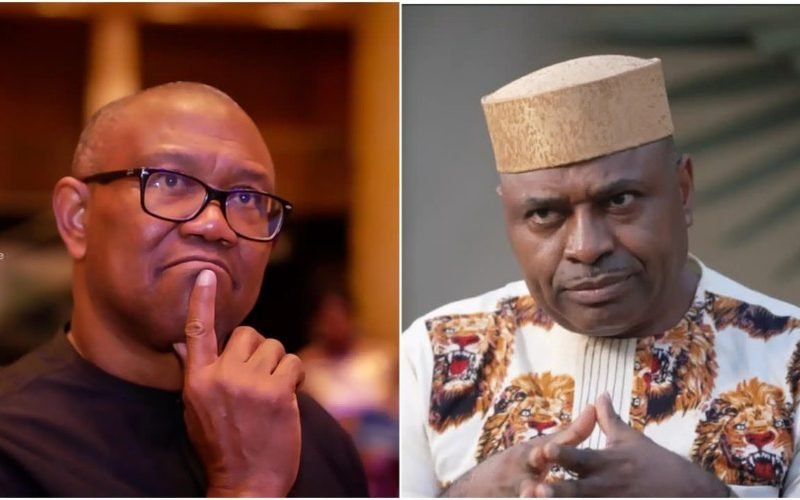
According to reports, Okonkwo identified President Bola Ahmed Tinubu, Atiku Abubakar and Peter Obi as the three major contenders for the 2027 presidential election. However, what attracted public attention was not his assessment of the political landscape but his attempt to diminish Peter Obi’s relevance by describing him as “more of a content creator than a contender” and then introducing a curious mathematical theory in which Atiku would allegedly secure two votes while both Tinubu and Obi would receive none.
The first question that naturally comes to mind is simple: how exactly did Kenneth Okonkwo arrive at such a calculation?
Politics is not mathematics conducted in a private classroom. Elections are determined by millions of voters, not by hypothetical arithmetic designed to create media headlines. If three individuals are supposedly participating in an election involving three votes, common sense would suggest that three votes should be accounted for. Yet Nigerians were presented with a calculation that somehow produced only two votes.
What happened to the third vote?
Was it discarded? Was it reserved somewhere? Or was it simply a political formula crafted to generate attention rather than provide meaningful political analysis?
More importantly, why should Nigerians be concerned about such calculations when the country is grappling with economic hardship, unemployment, insecurity, inflation, declining purchasing power and widespread frustration among citizens?
These are the issues deserving of serious national conversation.
What is even more surprising is the continued fixation on Peter Obi by individuals who claim to be working to promote Atiku Abubakar’s political ambition as well as President Bola Ahmed Tinubu. One would expect that those seeking support for Atiku would devote their energy to explaining his vision for Nigeria, his economic blueprint, his plans for job creation, his strategy for tackling insecurity and his approach to reducing the burden currently faced by ordinary Nigerians.
Instead, significant attention appears to be directed at discussing, De-marketing and demonizing Mr. Peter Obi.
This raises an uncomfortable question: does Atiku Abubakar’s political project lack enough compelling ideas to sell itself without constantly referencing Peter Obi?
The reality of politics is that voters are inspired by hope, vision and practical solutions. They are rarely convinced by endless attacks on political opponents.
If Kenneth Okonkwo truly believes Atiku represents a better alternative for Nigeria, then Nigerians deserve to hear detailed arguments about what Atiku intends to do differently from both the current administration and previous governments. That conversation would be far more productive than attempts to reduce another political figure’s popularity through dismissive labels and sarcastic analogies.
Even more interesting is the role Kenneth Okonkwo has chosen for himself in Nigeria’s political discourse.
For someone who speaks so passionately about leadership and political alternatives, many Nigerians would be interested in seeing him present himself as a viable candidate for public office. Whether in the Senate, the House of Representatives, a governorship race or even local government administration, leadership is ultimately demonstrated through service and accountability, not merely through television appearances and political commentary.
The Nigerian people are becoming increasingly sophisticated politically. They can distinguish between genuine policy conversations and political distractions. The era when political spokespersons could shape public opinion through rhetoric alone is rapidly fading.
Nigeria’s young population, in particular, is looking beyond personality clashes. They want to hear concrete solutions. They want to know how jobs will be created. They want to know how businesses will survive. They want to know how education will improve. They want to know how insecurity will be addressed. These are the questions that matter.
Unfortunately, too many self-appointed political commentators continue to dominate public discourse with arguments that contribute little to solving the nation’s problems. Their interventions often appear more focused on remaining politically relevant than advancing conversations that benefit ordinary Nigerians.
The truth remains that no amount of character assassination against Peter Obi will automatically translate into support for Atiku Abubakar or any other candidate in 2027. Nigerians have matured politically. They are increasingly interested in ideas, competence, integrity and performance.
The sooner political actors understand this reality, the better for our democracy.
Kenneth Okonkwo would serve both his principal and the Nigerian public better by focusing on what Atiku Abubakar can offer the country rather than constantly explaining why Peter Obi should not be supported. Democracy thrives when ideas compete against ideas, not when personalities are targeted through endless criticism.
As 2027 approaches, Nigerians deserve a campaign centered on policies, solutions and national development—not another season of political mudslinging disguised as analysis.
The country’s future is too important to be reduced to hypothetical calculations and media soundbites.
Nigerians are waiting for answers, not arithmetic.
Comr. Amos Oge Kalu is a media practitioner and ICT expert. He writes from Abuja, Nigeria.
Copyright Warning!
Disclaimer
Just to let you know, comments expressed here do not reflect the opinions of OHAFIATV News or any employee thereof. Also, every opinion expressed in any article is strictly that of the author(s), except where otherwise stated.